
Resource crisis
"A lot of very critical energy infrastructure has been... forced to shut down because of direct damage from drones and missiles."

Hello and welcome to Ekō News.
Drop us a line and let us know how we’re doing!
Oil power
As the US-Israeli war on Iran continues, economic ramifications are coming into focus.
Iran closed the Strait of Hormuz, a vital shipping lane for global oil, last week. With traffic slowed to a crawl—at best—the reality of a world without a steady supply of energy is becoming clear.
Stock markets around the world tumbled Monday on $100+ barrels of oil before the G-7 announced it would tap strategic reserves to defray the cost to the global economy.
But the war, and the ripple effects, are beginning to have an effect on alliances and trade. China, while endorsing the G-7 decision, made clear that it would do whatever it takes to ensure it retains its access to energy—and noted that it expected something of a Wild West attitude among powers: “All parties have their responsibility to ensure stable and smooth energy supplies.”
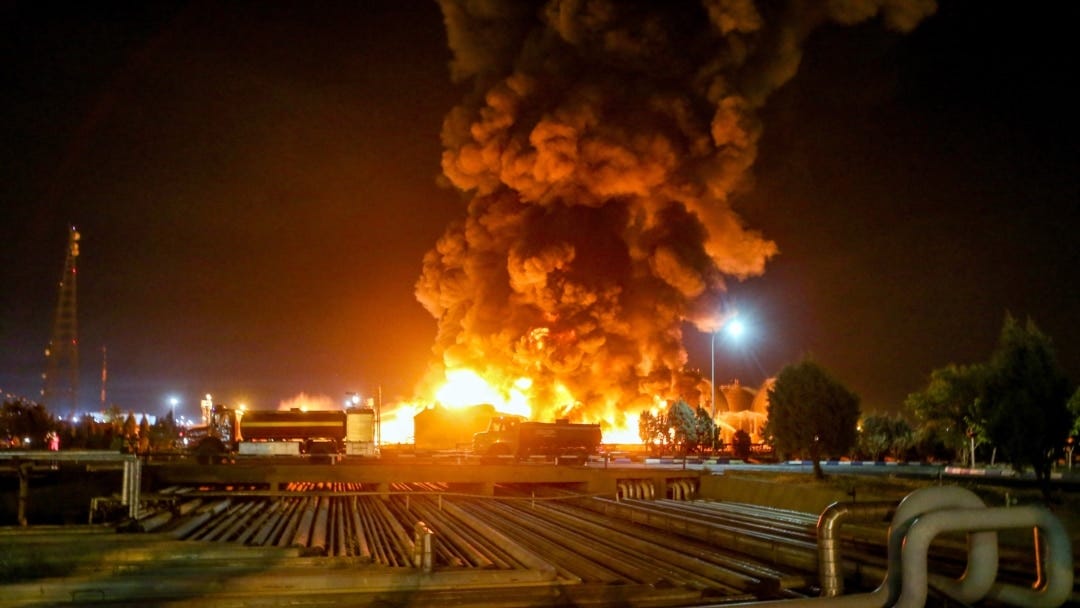
Meanwhile, the war is threatening energy infrastructure in the region. Israeli attacks on Iranian refineries led to toxic rain on Sunday in Tehran; flames from the burning tanks and piplelines filled the night sky. Iran has launched attacks on Bahraini refineries and may go further, hitting Saudi Arabia, as well.
“A lot of very critical energy infrastructure has been either forced to shut down because of direct damage from drones and missiles, or because production is effectively being shut in as a result of shipping grinding to a halt.”—Torbjorn Soltvedt, Verisk Maplecroft
In other news
Energy saver
Companies in the Philippines are being asked to consider a four-day workweek.
The four-day workweek is already in effect for many government offices as an energy cost-saving measure. Sen. Francis Escudero is now pressuring the private sector to follow the government’s lead.
Manila is also instituting the restrictions.
“Acting this early as we anticipate what could possibly happen would strengthen the country’s resilience should the situation worsen.”—Escudero
(Asia News Network) (GMA News)
Flood danger
Flooding in Kenya has killed dozens.
Fueled by storms intensified by the climate crisis, rain has led to floods in and around the capital Nairobi.
So far, 42 have died.
“I would call for joint efforts between the government humanitarian agencies to deal with this problem, and to understand why we are having this havoc.”—Munir Ahmed, Kenya Red Cross
(Reuters) (Al Jazeera)
Thawed tensions?
The US and Cuba could be near a surprise economic deal.
After months of tensions and a tightening of the brutal US blockade, the two countries are close to an agreement that could loosen travel restrictions and sanctions.
It’s worth noting that when Iran’s senior leadership were killed at the beginning of the Iran War on February 28, they were meeting to consider a US offer.
Here’s your campaign of the day

The images from Iran are haunting. A school, reduced to rubble. 168 lives gone. Most of them were little girls who should have been safe in class.
This is the reality of the US and Israel’s AI warfare. It’s a heartless military machine that relies on massive computing power to kill, again and again. And at the heart of that machine is Nvidia.
Nvidia markets itself as the genius company building the future. But its hardware is the keystone that powers the AI systems used to coordinate and execute military attacks. Now, Nvidia is planning a massive new server farm in Israel to expand its business of death and destruction.
Thanks for reading!
Ekō News is a project from Ekō. Read more about our work here.